English





n8n vs Zapier: A Powerful Alternative for Advanced Automation
n8n vs Zapier: The Short Answer
A customer request arrives. The workflow enriches it, routes it, records it, and alerts the team. Either n8n or Zapier can automate the process:
Customer request → enrich → route → record → notify team

The short answer is an operating-model split. Zapier favors managed convenience, while n8n favors workflow and deployment control. n8n Cloud keeps n8n’s workflow model without adding server operations. The remaining question is whether your integrations, usage, and ownership needs make that extra control worthwhile.
This is not a “free app versus paid app” contest. Zapier has a limited free plan, while self-hosted n8n Community has no software-license fee but still incurs infrastructure and operator costs. Start with workflow shape and integration fit. Then weigh team skill and billing behavior alongside data placement and ownership.
Same Job, Different Operating Models
Both platforms can respond to events and move or transform data. They can apply conditions as that data moves, then call APIs or connect applications across a multi-step process. Zapier is more than an if-this-then-that tool, while n8n’s visual canvas does not make complex workflows non-technical. Their capabilities overlap; their operating models do not.
The vocabulary is small:
- 🔄 Workflow: the complete automated process.
- ⚡ Trigger: the event that starts it.
- ✅ Action/task: an action is a Zapier step; a task is the usage unit generally recorded when that action succeeds.
- 🧩 Node: one step in an n8n workflow.
- ▶️ Execution: one complete n8n workflow run.

Think of Zapier as a serviced office: it is ready to use, and the provider handles the building. Self-hosted n8n is a workshop on premises you control. You can arrange it around the work and connect it to private systems, but you must maintain it. The analogy describes where the operational work sits, not which model is better.
n8n Cloud sits between those poles. n8n operates the infrastructure; you keep n8n’s canvas and workflow model. It is a deployment option, not a third competing product. Workflow complexity and infrastructure complexity remain separate problems.
📝 Note: n8n is source-available under its Sustainable Use License and describes the model as fair-code. It is not open source under the OSI definition.
With the operating models clear, “easy” can now mean two different things: easy to build or easy to operate.
Which Is Easier to Build, Share, and Maintain?
Judge ease across the workflow’s lifecycle: building, debugging, sharing, and ongoing support. The fastest demo is not always the easiest system to maintain six months later.
- Zapier usually wins the first-build test for business users. Guided configuration, polished templates, and mature connectors reduce the API and data-mapping knowledge required. Zapier runs the platform, so the team does not manage its servers or databases. Updates and TLS also stay with the vendor. That is a real advantage when the workflow stays within familiar SaaS products.
- n8n is visual, but it exposes more of the machinery. Node data and branches remain visible, while expressions, HTTP requests, and code sit close to the execution details. That demands more technical confidence at first, yet gives the maintainer more to inspect when routing rules change or an enrichment step fails.

Do not confuse workflow complexity with server complexity. n8n Cloud removes host operations, but difficult payloads still need transformation. Branches can multiply, and custom error handling still needs design. Self-hosting adds platform work. A technical owner is the person accountable for workflow failures and, where applicable, platform health.
Integrations, Custom Logic, and Workflow Depth
Connector breadth and technical flexibility solve different problems. As of September 2026, Zapier markets connectivity across 9,000+ apps, while its directory displays more than 10,000 entries. The n8n directory displays 2,192 integrations but counts nodes and integration types differently. Treat those totals as context, not a score.
Zapier’s large app catalog is useful when it includes the exact tool you need. Its native connectors handle setup and maintenance, so use them when they fit your workflow.
n8n is useful when you need custom connections or logic. It can connect to APIs, receive webhooks, run code, use custom nodes, and access private services. This makes missing integrations less of a limitation.

The request workflow shows the distinction:
Customer request → enrich → route → record → notify team
- Ready-made connector path: form → CRM → Slack, using supported actions with straightforward field mapping.
- Custom logic/API path: normalize an unusual payload → query an internal API → branch on account data → apply custom error handling → record and notify.
The smaller n8n directory does not mean n8n cannot connect to a system, and Zapier is not limited to native actions. The practical trade-off is maintenance: a supported connector leaves more of that work with the vendor, while HTTP requests, code, and custom nodes move it toward your team. Use an escape hatch when the custom behavior is central enough to justify owning it.
Both platforms support AI-assisted automation. Zapier packages AI for accessible use across its app ecosystem. n8n better suits developer-controlled flows. In those flows, model calls can sit inside deterministic checks and branches, with human review where needed. The differentiator is not AI itself, but the control around it.
Pricing: A Task Meter Versus Infrastructure Ownership
Same trip, different meter. Headline prices matter less than what each platform counts when a workflow runs.

In Zapier, a successful standard action generally consumes one task. Triggers do not, nor do failed or halted actions. Filters, Paths, and several built-in tools are also excluded from standard task usage. AI by Zapier and extended Code runtime can use different rates. Lead Router and MCP have their own rates as well. Think “successful standard action,” not “every step,” and check Zapier’s task-accounting guide for current exceptions.
On n8n Cloud, one complete run is one billed execution, with unlimited steps inside it. Self-hosted Community has no software task or execution subscription meter. Its capacity still depends on CPU, memory, and database performance. Storage, API quotas, and concurrency impose further limits.
📝 Note: Tasks and executions measure different things. The example shows how each meter reacts to one workflow shape; it does not equate the units or predict a bill.
For one standard version of the request workflow, the meters may behave like this:
| Stage | Zapier tendency | n8n Cloud tendency | Self-hosted Community tendency |
|---|---|---|---|
| 📥 Request arrives | Trigger; 0 tasks | One execution starts | One run starts on owned capacity |
| 🔎 Enrich request | 1 standard successful action | Same execution | More CPU/API wait/failure surface |
| 🔀 Route with Paths/conditions | 0 standard tasks in Zapier Paths | Same execution | Same run |
| 💾 Record and notify | 2 standard successful actions | Same execution | More work in the same run |
| 📊 Illustrative result | About 3 tasks per request | 1 execution per request | No software meter; infrastructure absorbs the load |
Under those assumptions, 100 requests would use roughly 300 standard Zapier tasks or 100 n8n Cloud executions. AI or other paid-rate tools would change the result. So would loops, searches, or separate workflows. This is a usage model, not a quote.

Cost extends beyond the meter. Zapier has a subscription and a shared task pool, with possible overages or held runs. n8n Cloud pairs an execution allowance with managed hosting. Self-hosted Community replaces the SaaS meter with server and storage costs. Backups and monitoring create ongoing work, as do upgrades, recovery, and staff time.
As of September 2026, Zapier Free includes 100 tasks per month and two-step Zaps. n8n Cloud offers a trial rather than a permanent free tier; self-hosted Community has no software-license fee. A tiny automation may be cheapest on Zapier Free. As runs become more frequent or step-heavy, model the actual meter instead of assuming the cheapest plan headline will stay cheapest.
Self-Hosting n8n: What You Gain—and What You Still Own
Start with placement and private connectivity. Do they solve a real requirement? Then consider whether you need environment customization, higher volume, or resource choice. If none of those changes the outcome, self-hosting adds work without much value.
📝 Note: A self-hosted engine can still send data to an external CRM, email provider, SaaS application, or model API. Those services receive whatever the workflow sends.
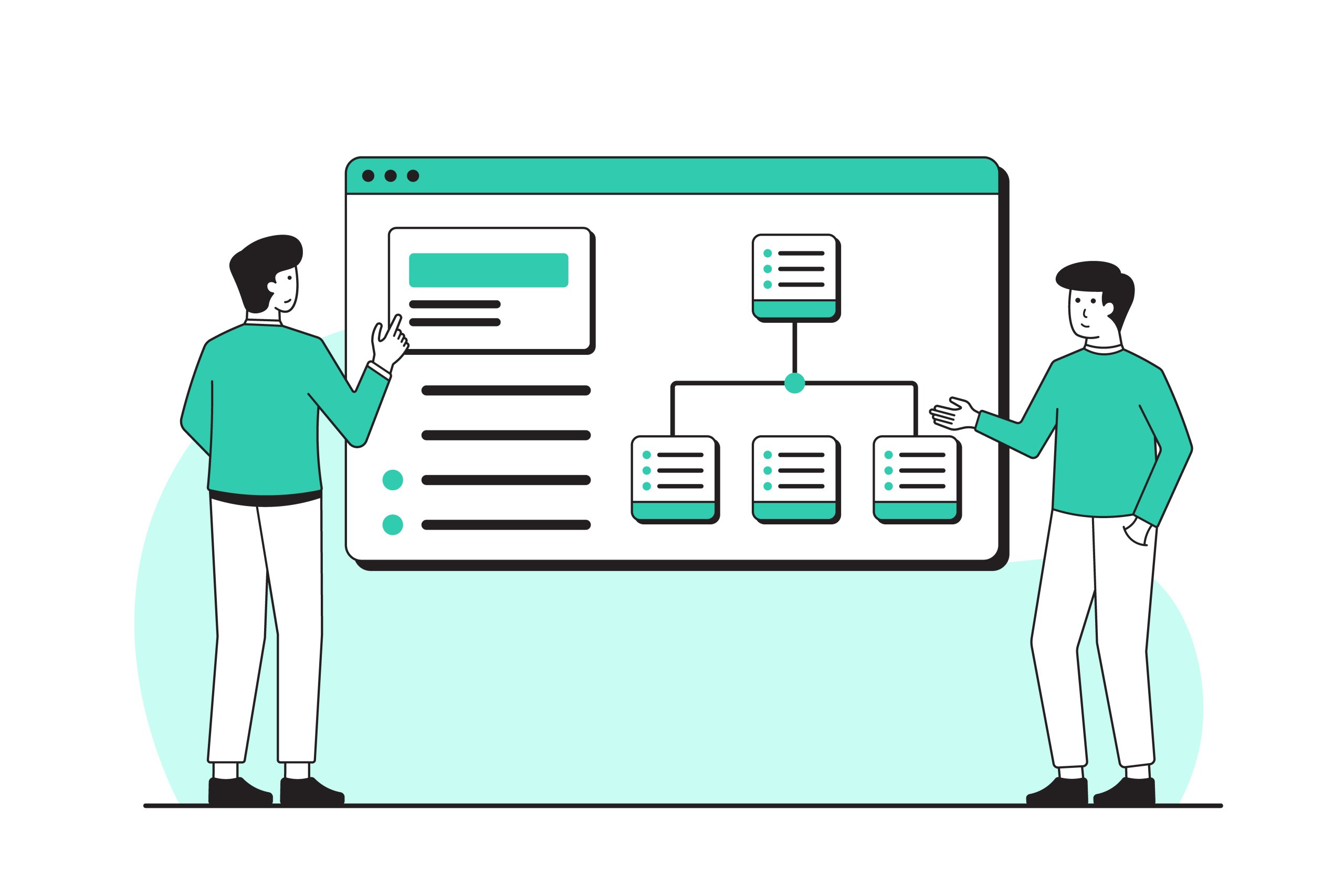
When those constraints are real, you can choose the host, region, and network path. You also control resources and storage, and can run n8n near private services. You can customize the environment and use custom nodes. Community edition also avoids a software meter per task or execution. Data placement means choosing where the engine, credentials, and execution records run—not isolating every connected system.
⚠️ Warning: Self-hosting gives deployment and data-placement control. It does not automatically provide privacy, security, or compliance, and it does not make costs disappear. n8n recommends self-hosting for experienced users because mistakes can cause downtime, data loss, or security problems.
The control and the operational bill arrive together:
| Control gained | Responsibility accepted |
|---|---|
| Choose host, region, and network | Patch and harden the host; configure HTTPS and access controls |
| Reach private services | Protect credentials and restrict network and node access |
| Choose CPU, memory, storage, and scaling | Monitor capacity, queues, database health, and concurrency |
| Control update timing or deployment method | Test upgrades and validate critical workflows afterward |
| Own execution history and backups | Back up application state and the database; test restoration |
| Avoid Community software usage metering | Pay for infrastructure and assign incident-response time |
Downtime means missed schedules and failed public webhooks. A healthy server does not guarantee healthy automation; third-party API or schema changes can still break workflows. Monitor outcomes, not only whether the container runs.

The AvaHost n8n Cloud App can reduce blank-server setup friction. It provisions n8n with PostgreSQL and handles the initial deployment and custom-domain HTTPS. Automatic application updates, scheduled backups, and terminal access are also included. The model remains self-hosted, and PostgreSQL remains unmanaged. The customer still owns credentials and workflow logic. Capacity decisions, recovery validation, and post-update testing also remain with the customer.
Treat a self-hosted n8n instance as an internal service, not a one-time installation. Its owner needs authority and time to respond to failures across both the workflows and the platform.
Which One Fits Your Actual Use Case?
At this point, start the shortlist with connector fit and custom logic. Then estimate usage growth and consider who will maintain the workflow later. Finally, decide whether the team wants infrastructure ownership. A polished demo can hide weaknesses in every one of these areas.
💡 Tip: Prototype the hardest representative path first. A clean happy path hides the costs that often decide between Zapier, n8n Cloud, and self-hosted n8n.
| Path | Best when | Main trade-off | Avoid when |
|---|---|---|---|
| 🔗 Zapier | Non-technical owners need mainstream or niche SaaS connectors, fast launch, easy handoff, and minimal operations | Task-based cost and less deployment control | Private-system reach, self-hosting, or code-heavy custom logic is central |
| ☁️ n8n Cloud | n8n’s branching, API, and code model is useful, but the team does not want infrastructure | Execution allowance and managed-service boundaries | Deployment placement or private-network control is the deciding requirement |
| 🖥️ Self-hosted n8n | Internal APIs, placement control, customization, step-heavy or high-frequency flows, and a named operator align | Security, updates, backups, monitoring, recovery, and feature-tier decisions | No operator is accountable, or managed SaaS already handles the workflow reliably |

Run the shortlist through five blunt questions:
- Are the required apps covered by maintained native actions?
- Does the workflow need custom APIs, code, or private-network access?
- How do its real runs expand tasks or executions?
- Who debugs the workflow six months from now?
- Who owns the host when it fails?
A mixed approach is also valid. You can start on n8n Cloud before self-hosting, or separate business-owned SaaS flows in Zapier from technical internal flows in n8n. If you are changing platforms, migrate one workflow at a time. Use the least operationally expensive path that works reliably.
Verdict: Rent Convenience or Own the Control Layer

Return to the customer request: enrich, route, record, notify. The visible automation may look similar in either platform; the meter, maintenance boundary, and failure owner do not. Those differences matter more than which canvas looks better in a five-minute demo.
The verdict follows the operating model:
- Zapier minimizes setup and ownership
- n8n Cloud keeps n8n’s workflow depth without server duties
- self-hosted n8n exchanges those duties for deployment control
If the decision matrix points to self-hosting, AvaHost’s n8n Cloud App can reduce initial deployment friction.
Use that prototype’s real task or execution data to model one month of use, then name the person responsible when it fails. Commit only after both the cost model and ownership model hold up.
Related Posts